English
  日本語
日本語  한국어
한국어  français
  Deutsch
  Español
  italiano
  русский
  português
  ไทย
ไทย  Malay
Malay 

Introduction
Outdoor security operations and field-based industries face increasing challenges in protecting personnel, maintaining reliable communication, and preserving critical video evidence.
Traditional recording devices often struggle when exposed to rain, dust, impact, and unpredictable working conditions. For security officers, emergency responders, and industrial workers operating in harsh environments, a standard camera is no longer enough.
Modern rugged body cameras have evolved into intelligent security devices that combine:
• waterproof protection
• impact resistance
• GPS positioning
• wireless connectivity
• intelligent recording functions
These capabilities help organizations maintain visibility and protect critical evidence—even in extreme environments.
Watch Rugged Body Camera Features in Action
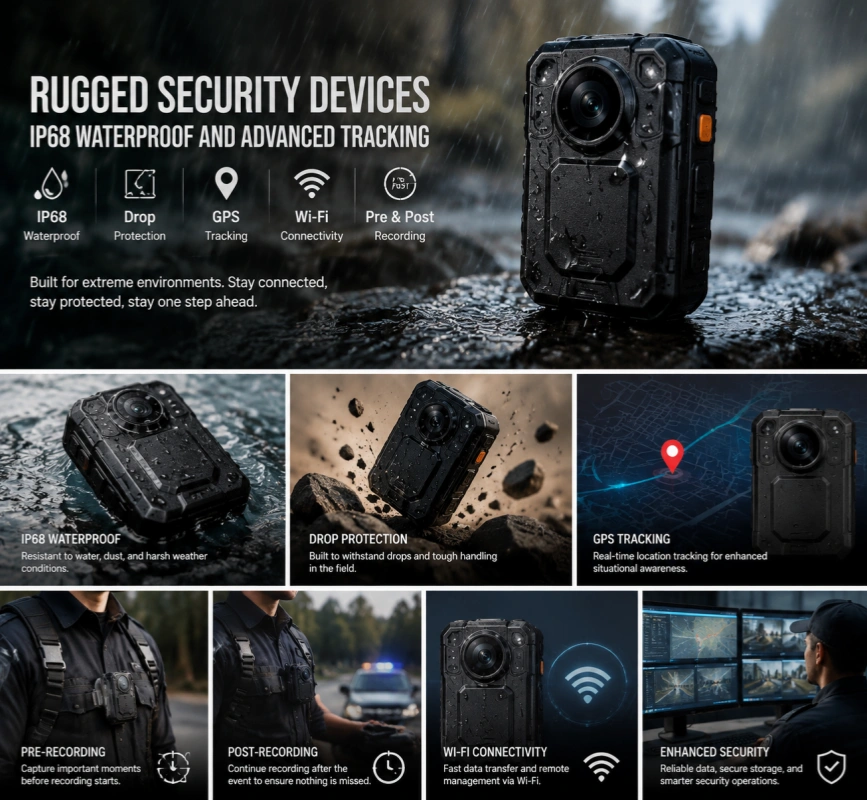
See how rugged security devices perform with IP68 waterproof protection, drop resistance, GPS tracking, Wi-Fi connectivity, and advanced recording features.
▶ Video:
Why Rugged Security Devices Are Essential for Challenging Environments
Security personnel and field workers often operate in environments where traditional cameras cannot provide reliable protection.
Examples include:
• outdoor security patrols
• construction sites
• mining operations
• public safety operations
• transportation inspection
• emergency response
In these scenarios, equipment may face:
Extreme weather conditions
Rain, humidity, snow, and dust can damage standard electronic devices.
Physical impact risks
Security equipment may experience:
• accidental drops
• vibration
• collision
• rough handling
Limited visibility and communication challenges
Remote locations often require real-time location information and reliable data transmission.
A rugged body camera addresses these challenges by combining durable hardware with intelligent tracking technologies.
IP68 Waterproof and Drop Protection: Built for Extreme Conditions
The durability of a security device directly affects its reliability in real-world operations.
A rugged body camera with IP68 protection provides resistance against:
Water and Dust Protection
The IP68 rating helps protect internal components from:
• heavy rain
• water exposure
• dust penetration
• outdoor environmental conditions
For officers and field workers, this means the camera can continue recording when weather conditions become unpredictable.
Drop and Impact Resistance
Field equipment must survive daily operational challenges.
A rugged design helps protect the camera from:
• accidental drops
• impact damage
• harsh handling
Unlike consumer-grade devices, industrial security equipment is designed for continuous operation in demanding environments.
GPS Tracking: Improving Personnel Safety and Operational Awareness
One of the biggest advantages of modern body cameras is the integration of GPS tracking.
A GPS-enabled body camera provides real-time location information, helping organizations improve:
Officer and Worker Safety
Command centers can better understand:
• where personnel are located
• which areas they have covered
• whether assistance is required
Faster Emergency Response
During emergencies, location data allows supervisors to quickly identify the nearest available personnel and coordinate response.
Accurate Evidence Management
GPS information adds valuable context to recorded footage by showing:
• where an event happened
• when it happened
• which officer or worker captured the footage
This improves transparency and supports investigation processes.
Pre-Recording and Post-Recording: Capturing Critical Moments
Important events often happen before an operator manually presses the record button.
Traditional cameras may miss the beginning of an incident.
Advanced body cameras solve this problem through:
Pre-Recording Function
Pre-recording captures moments before recording is activated.
Benefits include:
• capturing unexpected incidents
• preserving complete event sequences
• improving evidence accuracy
Post-Recording Function
Post-recording continues capturing after the recording button is stopped.
This helps ensure important details are not lost immediately after an event.
Together, pre and post recording functions create more complete video evidence.
Wi-Fi and Wireless Connectivity: Smarter Data Management
Modern security operations require more than video capture.
Advanced 4G AI body cameras for real-time remote monitoring enable security teams to stream live video, track field personnel, and improve remote command capabilities.
• Wi-Fi
• wireless data transfer
• remote management
These features help organizations:
• transfer evidence faster
• reduce manual data handling
• improve operational efficiency
Key Features to Consider When Choosing a Rugged Body Camera
When selecting a rugged security device, organizations should evaluate:
1. Waterproof and Rugged Protection
Look for:
• IP68 certification
• drop resistance
• industrial durability
2. GPS Tracking Capability
GPS helps improve:
• personnel management
• emergency response
• operational visibility
3. Recording Reliability
Important functions include:
• HD video quality
• pre-recording
• post-recording
• long battery life
4. Connectivity Options
Reliable communication requires:
• Wi-Fi
• optional wireless connectivity
• fast data transfer
5. Evidence Security
A professional body camera should support:
• secure storage
• reliable data protection
• easy evidence management
Applications of Rugged GPS Body Cameras
Law Enforcement
Police officers can use rugged body cameras for:
• patrol operations
• incident recording
• evidence collection
Private Security
Security companies benefit from:
• real-time monitoring
• employee protection
• incident verification
Industrial and Outdoor Operations
Industries such as:
• construction
• energy
• transportation
• utilities
can improve worker safety through video documentation and location tracking.
To ensure reliable operation in different scenarios, organizations should also select suitable body camera accessories and mounting solutions, including chest mounts, clips, and vehicle installation options.
Future Trends: From Rugged Cameras to Intelligent Security Platforms
Future rugged security devices will continue integrating:
• AI video analytics
• automated incident detection
• 5G connectivity
• cloud-based evidence management
The next generation of body cameras will not only record events but also help organizations predict risks and improve operational decisions.
Conclusion
Rugged body cameras are becoming essential tools for organizations operating in challenging environments.
With features such as:
• IP68 waterproof protection
• drop resistance
• GPS tracking
• Wi-Fi connectivity
• pre and post recording
these devices provide reliable video evidence while improving personnel safety and operational visibility.
For law enforcement, security teams, and industrial users, choosing a rugged security device ensures critical information remains protected—even when conditions become unpredictable.
FAQ
Are IP68 body cameras waterproof?
Yes. IP68-rated body cameras are designed to resist dust and water exposure, making them suitable for outdoor and harsh environments.
Why do body cameras need GPS tracking?
GPS tracking helps organizations locate personnel, improve emergency response, and add location information to recorded evidence.
What is pre-recording on a body camera?
Pre-recording captures video before the user manually activates recording, helping preserve important moments before an incident begins.
Are rugged body cameras suitable for industrial environments?
Yes. Rugged body cameras are designed for applications involving weather exposure, dust, impact risks, and demanding working conditions.