English
  日本語
日本語  한국어
한국어  français
  Deutsch
  Español
  italiano
  русский
  português
  ไทย
ไทย  Malay
Malay 

Imagine this scenario: You are driving your brand-new, tech-enabled vehicle from Munich, Germany, to Vienna, Austria. To protect yourself against insurance fraud and hit-and-runs, you have a smart dash cam running on your windshield. As you cross the border, you haven't changed your driving behavior, but you have unknowingly crossed a legal threshold. Your device, heavily restricted but tolerated in Germany, is now considered illegal surveillance equipment in Austria, exposing you to severe fines.
This is the current reality of driving in the European Union. Despite the overarching umbrella of the General Data Protection Regulation (GDPR), the legal landscape for car cameras is a chaotic patchwork. As vehicles evolve into rolling sensor hubs, this fragmented framework is no longer just a headache for tourists—it is a critical roadblock for automotive innovation.
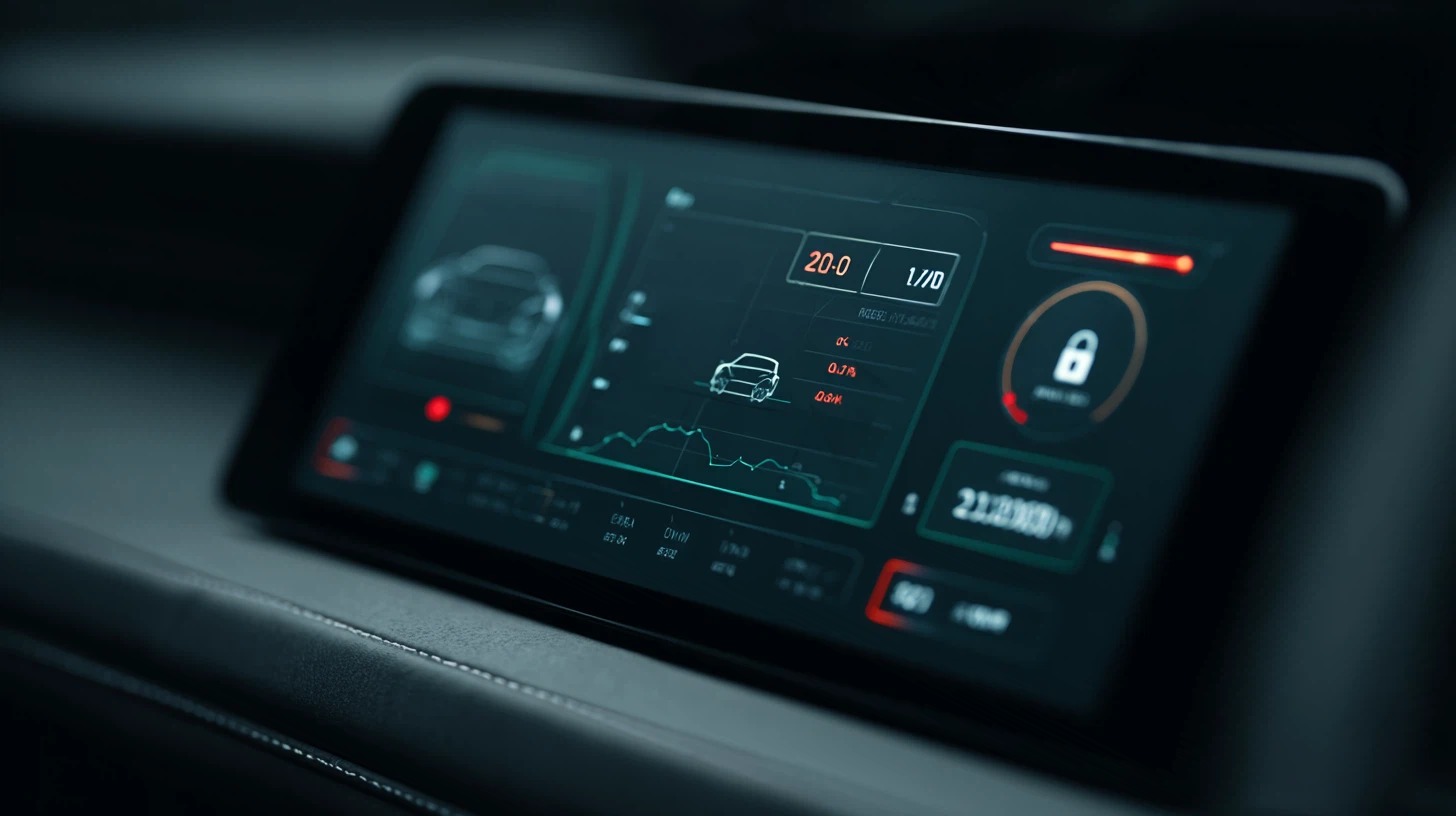
The Echoes of the Body Cam Regulatory Vacuum
To understand the current crisis with car cameras, we can look at the evolution of police body-worn cameras. In the early days of police body camera deployment, the technology advanced much faster than the policy. A recent study by the R Street Institute highlighted that this initial "regulatory vacuum" left individual agencies to make up their own rules about when cameras should be activated and how data should be stored. The result was public confusion, inconsistent transparency, and a deep mistrust of the technology.
The automotive sector is experiencing the exact same phenomenon today. The technology has arrived—dash cams and OEM-integrated 360-degree cameras (like Tesla's Sentry Mode) are ubiquitous—but the unified policies required to govern them are missing. The line between protecting one's personal property and unlawfully surveilling the public remains dangerously blurred.
The GDPR Paradox: One Law, Dozens of Interpretations
While GDPR was designed to harmonize data privacy laws across Europe, its application to dash cams has been left to the interpretation of individual member states. The resulting contradictions are staggering:
The Permissive (with conditions): In countries like the UK and France, dash cams are generally legal. Drivers can record their journeys, provided the footage is used solely for personal or insurance purposes and is not uploaded to social media where bystanders' faces or license plates are visible.
The Strictly Regulated: In Germany, the law is a delicate balancing act. Continuous recording is strictly prohibited. Dash cams are only legal if they employ loop recording and overwrite data constantly, saving footage only when a specific event (like a crash) triggers the G-sensor.
The Restrictive: In Austria and Portugal, using a dash cam to continuously monitor public spaces is practically illegal. The authorities view these devices as unauthorized CCTV systems. Getting caught recording the public road can result in fines amounting to tens of thousands of euros.
This fragmented reality means that a pan-European driver is expected to constantly recalibrate their vehicle's security settings based on GPS coordinates—an expectation that is both impractical and legally hazardous.
The Rise of Smart Vehicles Makes the Patchwork Unsustainable
The conversation is no longer just about a $50 aftermarket camera suction-cupped to a windshield. Today, cameras are deeply integrated into the architecture of modern vehicles. Advanced Driver Assistance Systems (ADAS), autonomous driving features, and integrated security systems require constant visual data collection.
When an automaker designs a global vehicle platform, they are forced to navigate a labyrinth of local European laws. Must they geofence the vehicle's security system so that the cameras automatically disable themselves when crossing into Austria? If an AI-driven smart camera flags a potential theft in a parking lot in Berlin, does the way it stores that video violate German loop-recording mandates?
Without unified guardrails, automakers are paralyzed, forced to either heavily restrict vehicle features for European consumers or risk massive GDPR compliance lawsuits.
A Blueprint for a Unified EU Car Camera Directive
Just as policymakers eventually realized that police body cameras needed standardized, state-wide regulations regarding activation and data retention, the EU desperately needs a harmonized Car Camera Directive.
To bridge the gap between innovation and privacy, this unified framework should establish:
A Universal Definition of "Privacy by Design": Mandating that all car cameras sold or operated in the EU default to event-triggered recording rather than continuous archival recording.
Clear Data Retention and Overwrite Protocols: Establishing standardized time limits for how long footage can be kept before being automatically deleted if no incident occurs.
Cross-Border Legal Immunity for Compliant Devices: If a camera system meets the rigorous EU-wide standard, it should be legally operable in every member state, eliminating the border-crossing penalty.
AI and Facial Recognition Guardrails: Strictly prohibiting civilian car cameras from running real-time facial recognition or biometric tracking on public streets, preserving the line between personal security and mass surveillance.
Conclusion
The line between protecting a vehicle and invading public privacy does not lie in the cameras themselves, but in the policies that govern them. As our cars become smarter and our roads more connected, Europe cannot afford to maintain 27 different definitions of what constitutes legal vehicle security. It is time for a unified approach—one that respects the spirit of the GDPR, protects the privacy of pedestrians, and allows drivers to navigate the continent safely and legally.