English
  日本語
日本語  한국어
한국어  français
  Deutsch
  Español
  italiano
  русский
  português
  ไทย
ไทย  Malay
Malay 

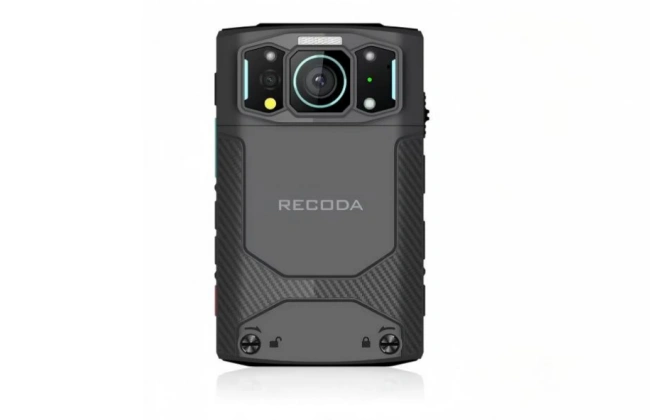
Body-worn cameras (BWCs) have fundamentally transformed law enforcement over the last decade. Originally deployed to standardise police actions, refine procedures, and safeguard the legal rights of all parties, BWCs now serve as the definitive objective witness in police-civilian interactions. However, early iterations presented practical challenges: officers forgetting to record under stress, camera lenses failing to sync with an officer’s line of sight, and the sheer administrative burden of reviewing petabytes of footage.
Today, a new era of AI-powered, hyper-connected Body cameras is overcoming these hurdles, shifting policing from a reactive model to a proactive, intelligent framework.

The Evidence-Based Impact of BWCs
The push for advanced BWC technology is heavily supported by academic research. According to a landmark systematic review published on PubMed Central (PMC), which analyzed 30 independent studies across various global jurisdictions, the deployment of BWCs has a scientifically proven impact on reducing the number of citizen complaints against police officers. The comprehensive data confirms that when cameras are properly integrated, they serve as a powerful deterrent for aggressive behavior and a vital mechanism for law enforcement transparency.
The Evolution: From Passive Observers to Active Intelligence
In the past, body cameras acted primarily as a “work secretary”—assisting officers in writing case reports and reconstructing event timelines after an incident occurred. While invaluable, this reactive approach barely scratched the surface of the technology's potential.
Today's AI-enabled BWCs process operations in real time. Advanced natural language processing (NLP) and computer vision algorithms can instantly generate highly accurate draft reports, identify positive de-escalation tactics, and automatically flag high-stress encounters for supervisor review. Furthermore, human error is being eradicated through automatic activation sensors. Cutting-edge systems now trigger BWC recordings automatically based on environmental cues, such as an officer unholstering a firearm or activating vehicle emergency lights.
Overcoming the Massive Data Capacity Challenge
Every agency knows the hidden cost of body-worn cameras is the data, not the hardware. A single encounter can generate terabytes of video data. With top providers storing over 100 petabytes of footage (equivalent to 5,000 years of video), manual review is impossible.
Automated analytics act as a force multiplier. By filtering through hours of mundane patrol footage to find specific keywords, aggressive body language, or procedural compliance, AI allows understaffed agencies to focus their human resources on actual police work rather than administrative busywork.
Industry Spotlight: The Rise of Transparent Data Overlays
As the market expands rapidly, advanced data visualization is becoming a core differentiator for leading manufacturers. When conducting a transparent overlay technology for body cameras industry analysis, it becomes evident that embedding real-time telemetry into video feeds is the next operational frontier.
Transparent overlays superimpose critical contextual data—such as exact GPS coordinates, vehicle speed, officer biometrics, active AI bounding boxes, and weapon draw status—directly onto the live or recorded video feed. This capability provides real-time crime centers and post-incident reviewers with immediate, glanceable intelligence without obstructing the primary field of view. This augmented approach bolsters situational awareness and adds an irrefutable layer of metadata to the evidentiary record.
Uninterrupted Connectivity: The Backbone of Modern BWCs
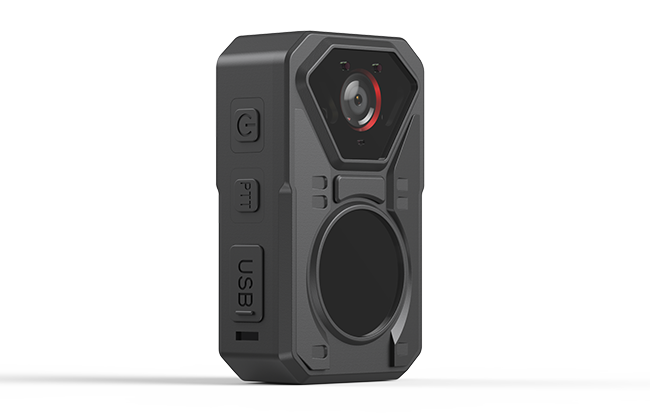
The most advanced AI and overlay features are rendered useless without seamless, secure connectivity. Modern BWCs are highly dependent on resilient data transmission, often utilizing 5G networks, autonomous network switching, and private APNs. Multi-network failover systems ensure that if one cellular network drops out in a rural area or a crowded urban center, another instantly takes over.
The results of connected, well-managed BWC programs speak for themselves:
93% reduction in civilian complaints against officers.
88% decrease in use-of-force incidents in monitored deployments.
60% drop in false allegations against police.
Addressing the Privacy and Bias Imperative
While the operational benefits of AI-powered body cameras are immense, they introduce profound privacy and civil liberties concerns. The integration of live facial recognition technology has sparked significant debate regarding algorithmic bias and the risk of wrongful arrests.
To balance security with transparency, stringent policy guardrails are mandatory. Agencies must ensure a "human-in-the-loop" approach, where AI serves as an investigative tool rather than a final decision-maker. Additionally, automated redaction tools are essential for blurring the personally identifiable information (PII) of innocent bystanders before footage is released, safeguarding privacy while maintaining accountability.
The Future of Law Enforcement
Body-worn cameras have evolved from standalone recording devices to interconnected, intelligent nodes within a unified public safety network. By harnessing artificial intelligence, automatic activation, secure cloud connectivity, and sophisticated overlay technology, law enforcement agencies can drastically reduce administrative burdens and improve transparency. Ultimately, while an algorithm can process a scene in milliseconds, it is the combination of cutting-edge technology and human judgment that will define the future of fair, effective, and transparent policing.