English
  日本語
日本語  한국어
한국어  français
  Deutsch
  Español
  italiano
  русский
  português
  ไทย
ไทย  Malay
Malay 

When a routine traffic stop escalates into a high-speed pursuit, an officer experiences an immediate adrenaline dump. Heart rates spike, tunnel vision sets in, and fine motor skills degrade. In these critical seconds, the last thing an officer should have to remember is reaching up to double-tap the record button on their Body Worn Camera (BWC).
Manual activation during high-stress encounters is a massive liability. It leads to missing crucial evidence, public distrust, and potential legal exposure. The law enforcement industry knows this, which is why automated BWC triggers have become a mandatory requirement for modern agencies.
But not all automation is created equal. When lives are on the line, which trigger mechanism actually works? Today, we are deep-diving into the two primary technologies—GPS Geo-fencing and RFID/Sensor-based Auto-Tagging—to determine which is the most reliable during a high-speed chase.
The Flaws of GPS Geo-Fencing in High-Speed Scenarios
GPS Geo-fencing relies on software and satellite data to create invisible boundaries or speed thresholds. For example, the system can be programmed to trigger the BWC if the patrol car exceeds 80 MPH, or if it crosses into a specific high-crime jurisdiction./products/4g-ai-body-worn-camera-m530.html
While this sounds great on paper, relying solely on GPS during a dynamic, high-speed pursuit introduces critical points of failure:
The Urban Canyon Effect: If a chase enters a downtown area with high-rise buildings, an underground tunnel, or a dense forest, GPS signals degrade or drop entirely. A BWC cannot trigger if it doesn't know where it is or how fast it is moving.
Refresh Rate Latency: Civilian and commercial GPS modules typically update once per second (1Hz). At 100 MPH, a vehicle travels 146 feet per second. The delay between the GPS calculating the speed, sending the data, and triggering the camera can result in missing the crucial first moments of an incident.
False Positives: Speed-based GPS triggers can accidentally activate a camera if an officer is simply speeding up to merge onto a highway during routine patrol, wasting battery life and server storage space.
The Verdict on GPS: It is a fantastic tool for post-incident route tracking and dispatch mapping, but it is too slow and too reliant on external signals to be the primary emergency trigger for BWCs.
The Instant Reliability of RFID and Hardware Sensors
Instead of relying on satellites miles above the earth, the most reliable automation happens inside the patrol car. RFID (Radio Frequency Identification), Bluetooth LE, and physical telemetry sensors create a localized, hardware-based trigger network.
This method links the BWC directly to the physical actions associated with an emergency response.
Lightbar and Siren Activation: The gold standard for pursuit recording. A sensor is wired directly into the patrol vehicle's lightbar or siren controller. The exact millisecond the officer hits the lights, an RF or Bluetooth signal is instantly broadcasted to the BWC, forcing it to wake up and start recording.
Weapon Rack and Holster Sensors: RFID tags placed on the patrol rifle rack or the officer's duty holster can instantly trigger the camera the moment a weapon is drawn.
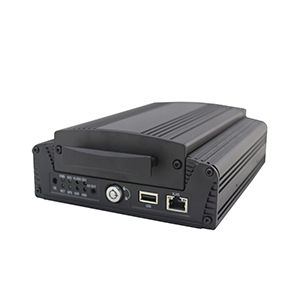
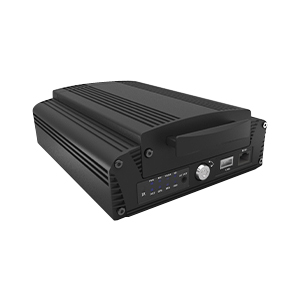
Vehicle G-Sensors: Built into the vehicle's Mobile DVR system, high-impact G-sensors detect sudden acceleration, erratic swerving, or collisions, immediately waking up the officer's camera.
The Verdict on Sensor-Based Triggers: Because these triggers rely on local radio frequencies and hardwired physical actions, they boast a near 100% reliability rate. They do not care if it is cloudy, if you are in a tunnel, or if the cellular network is congested.
The RECODA Ecosystem: Bridging the Vehicle and the Officer
At RECODA, our decade of experience in manufacturing both Mobile DVRs for police vehicles and Body Worn Cameras gives us a unique advantage in solving this exact problem.
We don't view the BWC as an isolated device. We engineer it as part of a connected ecosystem. By utilizing our Mobile DVRs as a central hub inside the police cruiser, we bridge the gap between vehicle telemetry and officer-worn tech.
When a RECODA-equipped patrol car activates its sirens, the Mobile DVR instantly detects the voltage change and securely broadcasts an activation command to the paired RECODA BWC. This localized, closed-loop system ensures that when the pursuit begins, the camera is already rolling—no manual button-press required.
When evaluating automated triggers, agencies must prioritize systems that eliminate cognitive load. Hardware-linked sensors ensure that your officers can focus on the road and the suspect, knowing their technology is actively covering their back.