English
  日本語
日本語  한국어
한국어  français
  Deutsch
  Español
  italiano
  русский
  português
  ไทย
ไทย  Malay
Malay 

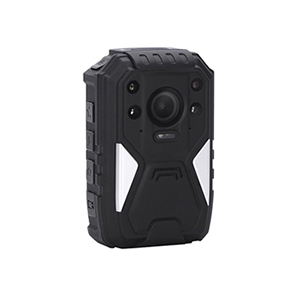
Imagine a patrol officer responding to a critical incident on a freezing night in Alberta or navigating a blizzard in Helsinki. The temperature has dropped to -20°C (-4°F). Right as the officer steps out of the vehicle and hits "Record" on their Body Worn Camera (BWC), the device abruptly shuts down.
In law enforcement, a dead camera isn't just an inconvenience; it’s a massive liability.
While most BWC specifications proudly claim "12 hours of continuous recording," those numbers are almost always tested in a comfortable 25°C (77°F) laboratory. The reality of winter policing is entirely different. At RECODA, with over a decade of R&D in mobile surveillance systems for global law enforcement, we know that surviving extreme cold requires more than just a ruggedized plastic shell—it requires fundamental changes to the battery’s internal architecture.
Here is a deep dive into why standard batteries fail in the cold, and the engineering required to keep BWCs running in sub-zero environments.
The Chemistry of Cold: Why Standard Li-ion Fails
To understand the solution, IT directors and procurement officers must first understand the failure point.
Body Worn Cameras primarily rely on Lithium-ion (Li-ion) batteries. Inside a Li-ion cell, lithium ions move from the anode to the cathode through a liquid electrolyte to generate power.
When the temperature drops to -20°C, a series of catastrophic chemical changes occur within standard consumer-grade batteries:
Electrolyte Thickening: The liquid electrolyte becomes viscous, drastically slowing down the movement of lithium ions.
Increased Internal Resistance: As the ions struggle to move, the battery's internal resistance spikes. The battery uses more of its own energy just to push the current through.
Severe Voltage Drop: The combination of the above factors causes the battery's output voltage to plummet. Even if the battery is 80% full, the voltage drops below the camera's minimum operating threshold, triggering an automatic safety shutdown to prevent cell damage.
Why "Tactical Band-Aids" Don't Work
Historically, some manufacturers have suggested mitigating cold weather by having officers wear the camera under a thick jacket until needed. However, this is practically useless in high-stress situations. A BWC must be mounted externally on a tactical vest to maintain a clear Field of View (FOV) and must be ready to capture pre-event buffering footage at a moment's notice.
Software optimizations (like reducing video frame rates to save power) also fail to address the root cause, which is a physical hardware limitation.
The Engineering Solution: Internal Heating and Advanced Cell Chemistry
To build a Body Worn Camera that truly survives a 12-hour shift in -20°C conditions, manufacturers must implement specific hardware engineering strategies:
1. Smart Internal Heating Elements (Self-Heating Tech)
The most effective way to combat extreme cold is to integrate a micro-heating element directly into the battery pack design.
How it works: When the BWC's internal thermal sensor detects that the ambient temperature has dropped below a critical threshold (e.g., 0°C), it routes a tiny, highly controlled amount of current to a specialized heating film wrapping the battery cell. By raising the core temperature of the battery to an optimal operational level, the electrolyte thins out, and the internal resistance drops. The battery "spends" a small fraction of its energy to heat itself, allowing the remaining 95% of the capacity to be discharged efficiently and safely.
2. Cold-Tolerant Battery Chemistry
Not all Lithium batteries are created equal. BWC manufacturers serving northern climates must source specialized low-temperature cells (such as tailored Lithium Polymer blends). These cells use proprietary electrolyte additives that resist freezing and maintain lower viscosity at -20°C, ensuring a stable voltage output even before the heating elements kick in.
3. PCB Thermal Routing and Structural Insulation
In a well-engineered BWC, the heat generated by the main processor (CPU/DSP) and the video encoding chip isn't simply vented into the freezing air. Through strategic Printed Circuit Board (PCB) layout and thermal conductive materials, this operational heat is carefully routed toward the battery compartment. Combined with aerospace-grade thermal insulation materials lining the inner casing, the BWC retains its own heat, creating a micro-climate that protects the battery.
The RECODA Standard for Winter Deployments
Procuring equipment for extreme environments means looking past the marketing gloss. If your agency operates in a region where winter temperatures plunge, a standard BWC will fail when you need it most.
At RECODA, we leverage our extensive R&D background in mobile DVRs and BWCs to engineer systems that withstand the harshest environments across Europe and North America. When evaluating your next BWC fleet, ask your vendor: "Does this camera feature active battery heating, or is it just relying on standard Li-ion chemistry?" Ensuring your officers have reliable power in -20°C isn't an optional feature—it's a tactical necessity.