English
  日本語
日本語  한국어
한국어  français
  Deutsch
  Español
  italiano
  русский
  português
  ไทย
ไทย  Malay
Malay 

Imagine this: An officer is engaged in a high-stress tactical encounter. The command center is watching the Body Worn Camera (BWC) live feed, ready to dispatch backup. But there's a problem—the video is delayed by just 4 seconds. In law enforcement, 4 seconds is an eternity. It’s the difference between a de-escalation and a worst-case scenario.
While the surveillance industry loves to market the "blazing speeds of 5G," the harsh reality is that cellular networks fluctuate violently in the field. Urban canyons, rural dead zones, and cell tower handoffs in fast-moving vehicles all introduce a hidden enemy: network latency.
At RECODA, with over 10 years of experience engineering mobile surveillance systems and BWCs, we know that slapping a 4G/5G chip into a camera doesn't guarantee real-time dispatch. Here is a deep dive into the technical solutions necessary to optimize live-streaming BWC feeds when the network fights back.
Why "Standard" 4G/5G Fails in the Field
Before fixing the problem, IT directors need to understand why consumer-grade streaming fails in law enforcement contexts.
Cell Tower Handoffs: When an officer is in a moving patrol car or sprinting on foot, the BWC is constantly jumping between cell towers. Each jump can cause packet loss and jitter.
Upstream Bottlenecks: Most cellular networks are optimized for downloading, not uploading. BWCs require massive sustained uplink bandwidth to push HD video to the command center.
Protocol Overhead: Older streaming protocols like RTMP or standard RTSP require deep buffering to maintain a smooth picture, intentionally adding seconds of delay to hide network hiccups.
To achieve sub-second latency for real-time dispatch, your BWC infrastructure must be engineered with specific counter-measures.
4 Technical Strategies to Minimize BWC Streaming Latency
1. Implementing Aggressive Adaptive Bitrate (ABR) Algorithms
Standard ABR is reactive—it drops the video quality after the network has already failed, leading to frozen frames and sudden lag.
For critical BWC dispatch, cameras must utilize Predictive ABR. By continuously monitoring uplink packet loss and jitter in real-time, the camera's firmware can dynamically downscale the video bitrate (e.g., from 1080p at 4Mbps to 480p at 500Kbps) milliseconds before a network drop occurs. The priority is keeping the live feed moving, prioritizing situational awareness over pixel-perfect resolution.
2. Moving to SRT or WebRTC Protocols
If your BWC fleet is still relying on legacy RTMP for live streaming, latency is unavoidable. Modern command centers need to adopt low-latency protocols:
WebRTC: Originally designed for real-time browser communication, WebRTC can achieve sub-500ms latency. It handles network drops gracefully, making it ideal for mobile law enforcement.
SRT (Secure Reliable Transport): SRT is highly resilient against packet loss. It uses advanced error recovery mechanisms to ensure that even if a 4G connection is dropping 10% of its packets, the command center still receives a coherent, low-latency video feed.
3. Edge-Level H.265 (HEVC) Encoding
Bandwidth is the enemy of latency. The larger the video file, the longer it takes to transmit over a congested 4G network.
By utilizing hardware-level H.265 (HEVC) compression directly on the BWC, we can shrink the video payload by up to 50% compared to legacy H.264, without sacrificing evidentiary details. Smaller payloads move faster through fluctuating cellular uplinks, drastically reducing the time it takes for a frame to reach the dispatcher's monitor.
4. Dual-Network Bonding and Failover (Mobile DVR Integration)
For officers operating in or around patrol vehicles, relying solely on the BWC's internal antenna can be risky.
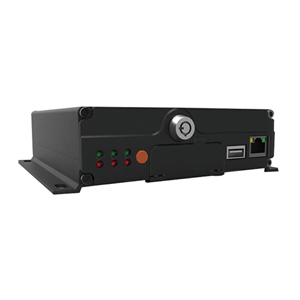
A highly effective strategy is tethering the BWC (via Wi-Fi or Bluetooth) to a Mobile DVR router installed in the police car. These mobile DVRs can utilize multiple SIM cards across different carriers (Network Bonding). If the AT&T network drops, the system seamlessly routes the BWC video packets through the Verizon network with zero interruption to the command center feed.
The RECODA Approach to Real-Time Situational Awareness
A reliable BWC is not just a recording device; it is a critical lifeline. Solving the latency challenge requires a holistic approach that bridges hardware engineering and software protocols.
When evaluating your next fleet of Body Worn Cameras, don't just ask, "Does it have 4G/5G?" Ask the hard questions: "What is your streaming protocol? How does your firmware handle 30% packet loss? Can it maintain sub-second latency during a cell-tower handoff?"
By demanding optimized latency solutions, police departments can ensure their command centers are making decisions based on what is happening right now, not what happened 5 seconds ago.