English
  日本語
日本語  한국어
한국어  français
  Deutsch
  Español
  italiano
  русский
  português
  ไทย
ไทย  Malay
Malay 

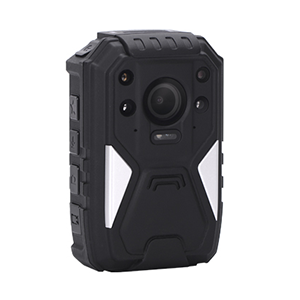
Every law enforcement officer knows the sinking feeling: you are in the middle of a chaotic, high-stress physical encounter, and you hear the distinct clatter of plastic hitting the pavement. Your Body Worn Camera (BWC) has just fallen off.
When a BWC detaches during a struggle, the department loses the most critical angle of the incident. Instead of capturing a suspect's actions, the camera ends up recording the sky, the asphalt, or nothing at all.
At RECODA, we have spent over 10 years analyzing how mobile surveillance hardware performs in actual law enforcement scenarios. A camera's internal specs mean nothing if it doesn't stay on the uniform. Today, we are breaking down the tactical failure points of the highly popular "Magnet Mounts" and comparing them to mechanical "MOLLE-Lock" systems in simulated field tests.
The Magnet Mount Illusion: Strong in the Office, Weak in the Street
Heavy-duty magnet mounts are incredibly popular. They are easy to attach, require no uniform modifications, and feel incredibly strong when you test them at your desk. So, why do they fail in the field?
The answer comes down to physics—specifically, Pull Force vs. Shear Force.
High Pull Force: Magnets are excellent at resisting a direct, perpendicular pull. If you try to pull the camera straight out from your chest, the magnets hold tight.
Low Shear Force Resistance: Magnets are notoriously weak against parallel "sliding" or "shearing" forces.
During a physical altercation, a suspect rarely pulls a camera straight off an officer's chest. Instead, arms flail, chests press together, and bodies twist. These actions create sheer force, sliding the magnetic backplate away from the front plate. Once the magnets slide even half an inch out of alignment, the magnetic field breaks, and the camera drops.
Furthermore, thick winter jackets or layered tactical gear increase the distance between the interior and exterior magnets, drastically reducing their holding strength.
The MOLLE-Lock Solution: Mechanical Retention
Modern tactical vests and external carriers are heavily equipped with MOLLE (Modular Lightweight Load-carrying Equipment) webbing. A MOLLE-Lock mount completely abandons magnetism in favor of mechanical retention.
A MOLLE-Lock system weaves durable polymer prongs through the heavy-duty nylon webbing of the officer's vest, locking shut with a mechanical latch or a heavy-duty snap.
Why Mechanical Locks Win in Combat:/
Zero Shear Vulnerability: Because the mount is physically woven through the vest fabric, it cannot slide up, down, or sideways during a grappling scenario.
Weight Distribution: A MOLLE-Lock distributes the weight of the camera across the structural webbing of the vest, preventing the camera from sagging and pointing toward the ground.
No Layer Interference: Unlike magnets that weaken through thick fabric, a MOLLE mount attaches directly to the outermost tactical layer.
Field Test Comparison: Magnet vs. MOLLE-Lock
To illustrate the difference, let's look at how these two mounting systems compare in three standard tactical stress tests.
Test 1: The Grapple (Ground Altercation)
The Scenario: An officer and a suspect are wrestling on the ground. Chest-to-chest contact and rolling occur.
Magnet Mount: FAIL. As the suspect's shoulder presses and slides against the officer's chest, the shear force easily dislodges the camera.
MOLLE-Lock: PASS. The camera remains mechanically anchored to the vest. While the camera lens might be temporarily obscured by the suspect's body, the device remains on the officer, continuing to record audio and waiting for the visual field to clear.
Test 2: The Full-Sprint Pursuit
The Scenario: A 100-yard foot pursuit.
Magnet Mount: MARGINAL. The heavy bouncing causes the fabric between the magnets to shift. The camera often ends up tilted at a 45-degree angle, recording the officer's own arm instead of the fleeing suspect.
MOLLE-Lock: PASS. The woven prongs keep the camera completely flush against the chest, minimizing bounce and keeping the lens pointed forward.
Test 3: The Seatbelt Snag
The Scenario: An officer rapidly exits a patrol vehicle, and the BWC catches on the edge of the seatbelt.
Magnet Mount: FAIL. The leverage of the seatbelt easily pops the magnetic plates apart, leaving the camera sitting on the driver's seat.
MOLLE-Lock: PASS. The mechanical lock resists the snag. The officer feels the tug, adjusts, and exits with the camera securely attached.
The RECODA Standard for Tactical Mounting
Procurement officers must evaluate mounting hardware with the same scrutiny they apply to video resolution and battery life.
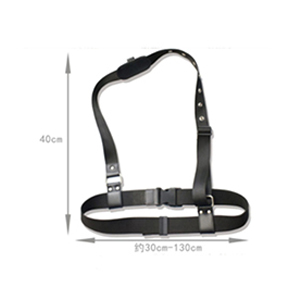
At RECODA, our Body Worn Cameras are designed with versatile, ruggedized mounting ecosystems. We offer robust MOLLE-Lock options, heavy-duty alligator clips, and specialized epaulet mounts, ensuring that no matter what uniform or tactical gear your department utilizes, the camera stays exactly where it belongs—recording the truth.